I will probably rely a kaleidoscope effect to create the illusion that there are more people on screen than actually exist, but I imagine anywhere between 3 - 6 people would be ample.
(insert video here)
The height of said people being different isn't a problem as the dancers will act like dancing Trees swaying in the wind, thus a simple dance routine and nothing that will look too complicated but maybe slightly humorous.
This will be in many ways abstract dance with a motif because of the people I will be relying on will not be professional dancers and are not getting paid and so I can only expect so much from them. Luckily however this will add to the overal effect of my video in relation to the abstractness of the silhouetted, mysterious people.
Useful links,
- http://www.petewarden.com/ for a kaleidoscope plugin.
- http://www.macprovideo.com/forum/video/final-cut-pro&id=2792:
"It's clumsy but:
Apply the Mirror effect (in the Perspective category) to a clip.
Copy that clip and paste it a few times into the tracks directly above the original. Be sure to change the mirror settings so it is different in each clip.
Crop the area of each clip to reveal a different mirrored section.
Jim"
http://www.archive.org/ - An online library of everything ever posted on the internet.
http://www.mikejones.tv/journal/2011/1/17/lightworks-editing-software-is-free-and-nobody-cares.html - Interesting discusion about the free editing software lightworks
Also look into adobe premire
Monday, 31 October 2011

Will their be any characters in your video?
This is why i'm drawn to the idea of using silhouettes of various people in a similar fashion to the Apple Ipod adverts.
The reason behind this is that I don't think I could very well represent a folk song about the land using people without investing in the correct scenes and costumes fitting of the song (a person dressed as a tree sounds funny, but would cost far too much to be pulled of professionally.
Silhouettes of people dancing in trees or in a field somewhere along to the song would give a sense of mystery (which most folk songs alure to) in not knowing who the people are, but would ironically keep the connection between people and the land. I think this could be quite effective if applied with constant style of the overal video theme.
What happened, idea change
Looking at this footage I realized that the bulk of it centered around country scenes in Cornwall, especially within Bodmin and some from wales. This country theme of stone circles and winding tracks made me think of the folk songs I would listen to on holiday in the car when I was younger (and still do). This led me to rethink my music choice in favor of a folk song such as one by Clannad, Jethro Tull or Damh the Bard etc.
Choosing any of the artists above would mean a far less chaotic video (in terms of editing) resulting in something altogether smoother in trying to blend with the flow of the music.
Before I edit the footage together that I've taken I'm strongly drawn to the song called Spirit of Albion by Damh The Bard.
I find this song lends itself lyrically quite strongly to the footage I have taken as well as having obvious points in the lyrics which could be edited to the verse, for instance:
" An isle so fair, a isle so green,
Known by many names."" An isle so fair, a isle so green,
When the, "known by many names" tolls I could have a scene come up where lots of quick shots of road signs appear in succession but seen through a semi opaque filter effect.
"Feel the pulse, the pulse of the land,
The blood boils within your veins."
Whatever footage is being shown here the effect would be that when he says pulse the scene would ripple or quickly expand forward to represent a sort of visual metaphor like the video is alive. Perhaps the scene could turn red as he says, "The blood boils within your veins" obviously to express the anger of Damh the Bard.
Wednesday, 19 October 2011
Video Analyses - Claymation Music Videos
Todays post will receive several updates as I analysis more of the the above.
This first video I will be targeting is Jackie Wilsons bizare Claymation video "Reet Petite"
From the start I find this video bizarre. I'm drawn to like it in the way that it follows the pattern of the music (the way the claymation plays in time with the music is quite something). However I find it context to the song it is rather random.
The song itself doesn't really lend itself to the idea of animation, but this might be what makes it such a good music video, the cross between bizarre and sense contradicts one another throughout the song, therefore leaving an odd memory. The mind trying to work out what the eyes have just seen.
This video however does lack some elements which could keep me interested for longer, more variations in scenes, while the continuity was good, and there were certainly a few different camera angles, having more changing scenes may have fitted with the feeling of randomness, again re enhancing this bizarre random message which would stick out and last longer in the memory.
The quality of claymation wasn't exactly the best, but for keeping in rythme to the speed of the song I thought it did quite well. In away it could be argued that by having the video not so smooth and slightly jumpy in places it imitates the vocal style of Jackie Wilson, who from the song above clearly sings in a rather dramatically changing pitch tone and tempo.
Overall this video gives me certain ideas for my own stock motion video.
Might clay be too much of a challenge?
Perhaps finding some kind of moveable, pre made doll may be easier to animate in my time frame.
If nothing else this has at least given me an avenue of research to explore.
The song itself doesn't really lend itself to the idea of animation, but this might be what makes it such a good music video, the cross between bizarre and sense contradicts one another throughout the song, therefore leaving an odd memory. The mind trying to work out what the eyes have just seen.
This video however does lack some elements which could keep me interested for longer, more variations in scenes, while the continuity was good, and there were certainly a few different camera angles, having more changing scenes may have fitted with the feeling of randomness, again re enhancing this bizarre random message which would stick out and last longer in the memory.
The quality of claymation wasn't exactly the best, but for keeping in rythme to the speed of the song I thought it did quite well. In away it could be argued that by having the video not so smooth and slightly jumpy in places it imitates the vocal style of Jackie Wilson, who from the song above clearly sings in a rather dramatically changing pitch tone and tempo.
Overall this video gives me certain ideas for my own stock motion video.
Might clay be too much of a challenge?
Perhaps finding some kind of moveable, pre made doll may be easier to animate in my time frame.
If nothing else this has at least given me an avenue of research to explore.
Idea Pitch
The song of choice above, the power point is a presentation I demonstrated infront of the class based pitch is being hosted here on
opendrive.com:
http://www.opendrive.com/files/OV84NjI3X3NrUnRr/Idea%20pitch.pptx (Stream)
http://www.opendrive.com/files/OV84NjI3X3NrUnRrX2I1YmE/Idea%20pitch.pptx (Download

Monday, 17 October 2011
Looking for the Mouse
With my video idea down on virtual paper, I have decided to take todays session to focus on finding the right cartoon mouse to be depicted in my video.
[I will be going back to finishing up my analyses with a few different blog entries over the next few days].
So, the mouse footage will be filmed in stop motion. This is to centralise on the idea of the mouse being trapped in time, rather than having moved on. This leads my areas of research to be defined by two logical values:
*Cartoons filmed in stock motion.
*Old mouse characters between 1800-1950's.
Stop motion, a brief history
(Claymation)
Probably the most people commonly associate with stop-motion animation, claymation has been around since at least 1908, when the short film The Sculptor’s Nightmare wowed audiences and then four years later when Modeling Extraordinary did the same. These films started appearing more and more frequently because in 1897 an art teacher in the UK had invented plasticine: a non-drying clay that was easily malleable and would retain its shape well. Since it was easy to sculpt and manipulate, filmmakers soon found themselves using this instead of simply moving objects around and photographing them for their subjects.
Eventually animators started putting plasticine on top of wire-armature skeletons, which allowed them to move their models around with even more ease. This is the style of claymation that you see with Wallace & Gromit, Gumby, and even The California Raisins. Interestingly, the term “claymation” is actually a registered word, held by filmmaker Will Vinton, who created the anthropomorphic Raisins. He copyrighted the term in 1978 to refer to his films, although now it’s generally recognized as the generic term to refer to plasticine / clay animation.
The rise in popularity of claymation accelerated through the late 70s, when Vinton and Aardman Studios started producing his short claymation films, through the 1980s which gave us the world’s first stop-motion animated film in Will Vinton’s Adventures of Mark Twain. The 1980s also saw the appearance of of Wallace & Gromit for the first time. Although they starred in a series of shorts, they finally had their feature film debut withCurse of the Were-Rabbit in 2005, although they were pre-dated by Chicken Run in 2000 as Aardman and Dreamworks’ first feature-length claymation film. Interestingly enough, Nick Park of Aardman and Wallace & Gromit fame did stop-motion claymation animation for Peter Gabriel’s “Sledgehammer” music video, which features object animation, direct manipulation animation, claymation, and pixilation.
(Taken from, http://www.slashfilm.com/geekbomb-a-brief-history-of-stop-motion-animation/ )
Old mouse characters:
Atomic Mouse - Funny mouse character create in 1953 by Al Fago
Steam boat Willie - Created 1928. Could be filmed as a moving picture (stop motion), rather than claymation
The mice who have interested me:
How much work to create the video (Roughly)
"For a 30-minute movie, there would be approximately 21,600 stops to change the figures for the frames (Ref. http://en.wikipedia.org/wiki/Clay_animation)."
My video will run at around the three minute mark
(roughly the length of my choosen song (Ref. http://www.youtube.com/watch?v=yxM3Kf8uaYA this link may need double checking, at the moment I cannot find out who the artist who made the song is as it is a remix, however I know the song is from a game called Secret of mana star of darkness). This will mean I will about an equal (if not slightly longer) stop motion video, which calculates roughly the following:
21600 / 30= 720 * 3 = 2160.
So i need to capture between 2100 - 2500 pictures of my mouse moving on set.
I will split this into sections and then loop video where needed.
A brief plan:
-The song as specific sections that could almost be split into musical scenes. So listening to the song I would say there is a clear difference in the music every 20 seconds or so.
-20 seconds is a third of a minute. 1 minute = 720. 1/3 = 240.
-A three minute video would roughly from this calculations come to nine lots. However I think certain sections of music get repeated so this may save me having to do two of three sets of 240 shots (if there are three sections repeated at 20 seconds each)
-I need to create the character out of something easy to animate with, such as clay, or foam etc.
-Construct stage for filming.
-Look into cheap alternatives for green screening (If there is a way of filming the background of my set with a cheaper DYI solution this would be perfect as I could then have the video footage running smoothly when it is edited in later.
[I will be going back to finishing up my analyses with a few different blog entries over the next few days].
So, the mouse footage will be filmed in stop motion. This is to centralise on the idea of the mouse being trapped in time, rather than having moved on. This leads my areas of research to be defined by two logical values:
*Cartoons filmed in stock motion.
*Old mouse characters between 1800-1950's.
Stop motion, a brief history
(Claymation)
Probably the most people commonly associate with stop-motion animation, claymation has been around since at least 1908, when the short film The Sculptor’s Nightmare wowed audiences and then four years later when Modeling Extraordinary did the same. These films started appearing more and more frequently because in 1897 an art teacher in the UK had invented plasticine: a non-drying clay that was easily malleable and would retain its shape well. Since it was easy to sculpt and manipulate, filmmakers soon found themselves using this instead of simply moving objects around and photographing them for their subjects.
Eventually animators started putting plasticine on top of wire-armature skeletons, which allowed them to move their models around with even more ease. This is the style of claymation that you see with Wallace & Gromit, Gumby, and even The California Raisins. Interestingly, the term “claymation” is actually a registered word, held by filmmaker Will Vinton, who created the anthropomorphic Raisins. He copyrighted the term in 1978 to refer to his films, although now it’s generally recognized as the generic term to refer to plasticine / clay animation.
The rise in popularity of claymation accelerated through the late 70s, when Vinton and Aardman Studios started producing his short claymation films, through the 1980s which gave us the world’s first stop-motion animated film in Will Vinton’s Adventures of Mark Twain. The 1980s also saw the appearance of of Wallace & Gromit for the first time. Although they starred in a series of shorts, they finally had their feature film debut withCurse of the Were-Rabbit in 2005, although they were pre-dated by Chicken Run in 2000 as Aardman and Dreamworks’ first feature-length claymation film. Interestingly enough, Nick Park of Aardman and Wallace & Gromit fame did stop-motion claymation animation for Peter Gabriel’s “Sledgehammer” music video, which features object animation, direct manipulation animation, claymation, and pixilation.
(Taken from, http://www.slashfilm.com/geekbomb-a-brief-history-of-stop-motion-animation/ )
Old mouse characters:
Atomic Mouse - Funny mouse character create in 1953 by Al Fago
Steam boat Willie - Created 1928. Could be filmed as a moving picture (stop motion), rather than claymation
The mice who have interested me:
How much work to create the video (Roughly)
"For a 30-minute movie, there would be approximately 21,600 stops to change the figures for the frames (Ref. http://en.wikipedia.org/wiki/Clay_animation)."
My video will run at around the three minute mark
(roughly the length of my choosen song (Ref. http://www.youtube.com/watch?v=yxM3Kf8uaYA this link may need double checking, at the moment I cannot find out who the artist who made the song is as it is a remix, however I know the song is from a game called Secret of mana star of darkness). This will mean I will about an equal (if not slightly longer) stop motion video, which calculates roughly the following:
21600 / 30= 720 * 3 = 2160.
So i need to capture between 2100 - 2500 pictures of my mouse moving on set.
I will split this into sections and then loop video where needed.
A brief plan:
-The song as specific sections that could almost be split into musical scenes. So listening to the song I would say there is a clear difference in the music every 20 seconds or so.
-20 seconds is a third of a minute. 1 minute = 720. 1/3 = 240.
-A three minute video would roughly from this calculations come to nine lots. However I think certain sections of music get repeated so this may save me having to do two of three sets of 240 shots (if there are three sections repeated at 20 seconds each)
-I need to create the character out of something easy to animate with, such as clay, or foam etc.
-Construct stage for filming.
-Look into cheap alternatives for green screening (If there is a way of filming the background of my set with a cheaper DYI solution this would be perfect as I could then have the video footage running smoothly when it is edited in later.
The song (background and why?)
The song I will be using in my music video is a song that has been taken from the super nintendo entertainment system game Secret of Mana. The version I will be using is a Teckno Remix and at the moment I cannot find reference to who created it (Video of song www.youtube.com/watch?v=yxM3Kf8uaYA).
The original song was composed by Hiroki Kikuta.
The original song was composed by Hiroki Kikuta.
Wednesday, 12 October 2011
Camera Session Workshop
Session 1:
Session 2:
Notes:
-Was shown a demonstration of how to set up a Video Camera.
-Setup a Video Camera.
-Went outside with Cameras and took FOUR pieces of sample footage.
-This was of traffic by the road and people within the College field.
-Took video samples and uploaded them to pc for editing on Final Cut express.
-Windo-Arrange-Standard
J= backwards
k= Stop
L= Forwards
If video has a red line after modifying the speed, go to sequence, render.
Session 2:
Notes:
-Was shown a demonstration of how to set up a Video Camera.
-Setup a Video Camera.
-Went outside with Cameras and took FOUR pieces of sample footage.
-This was of traffic by the road and people within the College field.
-Took video samples and uploaded them to pc for editing on Final Cut express.
-Windo-Arrange-Standard
J= backwards
k= Stop
L= Forwards
If video has a red line after modifying the speed, go to sequence, render.
First idea
I was given inspiration by my friend Joe Parsons the other day whilst listening to a song entitled, "Secret of Mana Techno Mix". The idea he gave me was simple but effective, to do a video of the song with the main character being a small mouse that would be black and white, walking across different segments of Color video in time to the rhythm.
This idea made me think it would be the perfect concept to build upon for my media music video.
Now that I have had some time to think other my friends initial thoughts the idea has developed. I will be filming the mouse in stop motion upon a green screen.
The mouse will be walking along a piano path, jumping on certain keys in time to the piano track in the song. The reason for using Stop Motion in the mouse is to centralise on the idea that the mouse (for instance danger mouse, mickey mouse etc) has not moved on whilst everything around it has, the video, the music etc.
The background footage will be filmed in full color and will not be stock motion. I will be filming this footage from a vehicle (car/van).
This will be one long scene, but will contain edits and cuts to different roads.
This will act as staying with the bass beat and the way it changes, so if theres a sudden drop/change in the music, there may be a flash to another bit of footage of a different road journey that I have recorded.
This idea made me think it would be the perfect concept to build upon for my media music video.
Now that I have had some time to think other my friends initial thoughts the idea has developed. I will be filming the mouse in stop motion upon a green screen.
The mouse will be walking along a piano path, jumping on certain keys in time to the piano track in the song. The reason for using Stop Motion in the mouse is to centralise on the idea that the mouse (for instance danger mouse, mickey mouse etc) has not moved on whilst everything around it has, the video, the music etc.
The background footage will be filmed in full color and will not be stock motion. I will be filming this footage from a vehicle (car/van).
This will be one long scene, but will contain edits and cuts to different roads.
This will act as staying with the bass beat and the way it changes, so if theres a sudden drop/change in the music, there may be a flash to another bit of footage of a different road journey that I have recorded.
Monday, 10 October 2011
Analysing CD covers/ Digipaks and Adverts
.jpg) |
| This is from the album Stormwatch by Jethro Tull. I like the art style of it but also find the use of binoculars quite interesting, as though implying the storm being watched is the audience, As the lead singer is staring into the storm which is directly where the audience would view the piece from. |
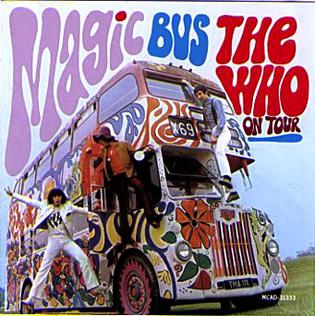
I like the way the above cover by the Who mix's a vibrant graphic style whilst
maintaining the reality of photography. I think it is a strong effect and feels very
reminiscent and stereotypical of the hippies, 60's vibrant and extravagant themes.

DJ BEEZ November Mix Cd

This Cd comes from the Australian formed alternative metal band Karnivool
you will not see me"
The Cd cover appears to be an Eye, which is being affected by music, demonstrated through the swirly lines which are akin to that of electricity/vibrations. This is a visual metaphor to describe how the intensity of the music will wake "YOU" up. The artists are attempting to convey a message, possibly a hope of change. The front cover of their album art I think is therefore appropriate.
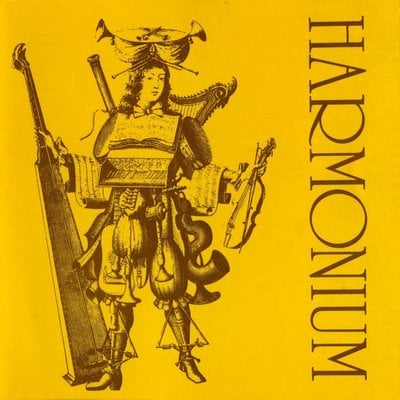
Harmonium is the first album by the folk rock band by the same name. The band originates from Quebec . Their first album was released in the mid seventies (1974)
The cover depicts a rather flamboyant appearing minstrel, thus representing the style of music in question. Though it is a rather simple album cover I think that the sketched drawing fits the plain yellow background as it gives it an illusion of age, as though the album has some history/myth behind it. The way that only one person displays what the entire band has created (that person most likely fictitious) gives a sense of unity, and the many instruments the figure holds would make it appear as though it is a one man band, or a band which comes together as one.

Santana is a band dating back to the sixites, with instrumental song, "Soul Sacrifice" being fondoly remembered from Woodstock festival many years on.
The above album art taken from their 1999 album Supernatural is a mix of various music styles, most specifically latin/rock. Its a collaboration of artists from Santana to Eric Clapton working in harmony. The album creates this theme of collaboration by the form of its art style, a collage of different musical instruments artistically sown together through a thread of myths and legends such as the centre piece being that of a Mermaid!
I think this is a very interesting album cover and it caught my eye straight away, which lead me to begin listening to the music, which in turn interests me to the artists other work. Therefore i'd say this is a successful album cover and something to bare in mind when creating my own cover.
The above album art taken from their 1999 album Supernatural is a mix of various music styles, most specifically latin/rock. Its a collaboration of artists from Santana to Eric Clapton working in harmony. The album creates this theme of collaboration by the form of its art style, a collage of different musical instruments artistically sown together through a thread of myths and legends such as the centre piece being that of a Mermaid!
I think this is a very interesting album cover and it caught my eye straight away, which lead me to begin listening to the music, which in turn interests me to the artists other work. Therefore i'd say this is a successful album cover and something to bare in mind when creating my own cover.
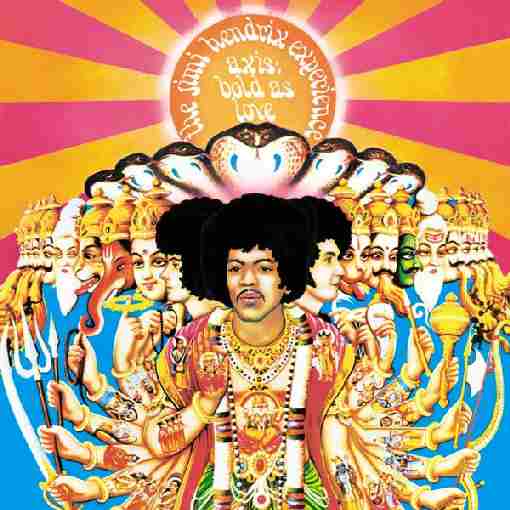
The second major studio album released by The Jimmy Hendrix experience, Axis as bold as love was released in 1967. Interesting interpretations of the song on the album entitled, "bold as love" give an insight into the bizarre yet complex and expressive front cover. Two things to note, Jimmy couldn't apparently read music and so expressed in color, this presumably meant most of his lyrics were made on the spot. I think the album art represents this style of music, i mean the lyrics clearly show this in-depth euphemism type meaning,

Blasphemophagher “The III Command of the Absolute Chaos" caught my eye by the sheer devastation represented in the artwork. The newly released album as of 31st of October 2011 is more than in keeping with its track listing, songs ranging from "Chaostorm of Atomization" to "Primordial Desolation". I think the black hole in the centre of the album cover artwork is not only in keeping with the musical work, but states a very important message.
In a time when Nuclear War seems about to boil, political messages through art might be the only way to warn of true devastation. While my video isn't on post destruction, I think this concept of visual obliteration could be incorporated to a degree, perhaps the cd art itself could be influenced from this design, images or a scene bursting out from the centre, in a reverse of destruction.
- Your CD/Digipak should consist of either 4,6 or 8 panels.
- It should reflect/ promote the artists/ music's image and create Synergy with; and reflect the style of your Video and AD. Needs to be similar, not necessarily the same.
- It should also relate to the artist/ type of music and the target audience.
- Before creating your cover/ Digipak you should analyse existing covers. Anaylses atleast two different type of covers for instance artistic or photographic, but include lots of example of the two or more cover style you choose to analyse.
In analyzing Covers you should examine the following:
- Design; layout, color, typography, style.
- Genre; Artist/Music, how does it relate? What does it tell us about them!
- Conventions?
- Audience; who? How do you know? How does it appeal/relate to that audience?
- How does it reflect/promote the image of the artist?
- What messages does it give about the artist? Music?
- What standardized conventions are there?
- How does it relate to other products (in the package)?
Analyzing Adverts:
- What is being advertised?
- Who is Ad targeting?
- How?How are artist and music being represented?
- Are any stereotypes or conventions being used?
- What message/s is it giving to the audience?
You should analyse the following:
- Design; layout, color, text, design, style.
- Function, inform/ persuade/ promote/ sell. How does it do it?
- Conventions; Song/ album title, artist, visual link to video, intertextuality, reviews, information on content, release date, where available, record label logo, website address.
- What is it telling us about the artist? Music? Etc.
- How does it link to the product it promoting? (how does yours link to your video/ cover)
- Your CD/Digipak should consist of either 4,6 or 8 panels.
- It should reflect/ promote the artists/ music's image and create Synergy with; and reflect the style of your Video and AD. Needs to be similar, not necessarily the same.
- It should also relate to the artist/ type of music and the target audience.
- Before creating your cover/ Digipak you should analyse existing covers. Anaylses atleast two different type of covers for instance artistic or photographic, but include lots of example of the two or more cover style you choose to analyse.
In analyzing Covers you should examine the following:
- Design; layout, color, typography, style.
- Genre; Artist/Music, how does it relate? What does it tell us about them!
- Conventions?
- Audience; who? How do you know? How does it appeal/relate to that audience?
- How does it reflect/promote the image of the artist?
- What messages does it give about the artist? Music?
- What standardized conventions are there?
- How does it relate to other products (in the package)?
Analyzing Adverts:
- What is being advertised?
- Who is Ad targeting?
- How?How are artist and music being represented?
- Are any stereotypes or conventions being used?
- What message/s is it giving to the audience?
You should analyse the following:
- Design; layout, color, text, design, style.
- Function, inform/ persuade/ promote/ sell. How does it do it?
- Conventions; Song/ album title, artist, visual link to video, intertextuality, reviews, information on content, release date, where available, record label logo, website address.
- What is it telling us about the artist? Music? Etc.
- How does it link to the product it promoting? (how does yours link to your video/ cover)
Tuesday, 4 October 2011
Mirrorball - Chris Cunningham, Notes
Part 1:
In part one of mirrorball with Chris Cunningham, he reveals several interesting points about his work which shed light on what would otherwise be considered a rather dark topic.
He starts the video with a brief background to his music career, relating a lot of his talent to spending time with his fathers speakers,
"I find that sound is what activates my imagination really." 0:55
This would make it seems that he has a rather natural talent for crossing sound with the visual, resulting in very smooth transitions within his music videos. It is possible that a lot of the intertextual references such as concerning politics and sexualization (See window licker video) seen in his videos are second nature in part with his natural thinking process.
He later confirms this by saying,1
"The dark thing is something thats really something other people pick up on, you know what I mean? Its certainly not my idea of dark" 2:36
This shows that while the points he puts across in his videos may well be intentional, the reason the go so well with the flow of the music is related to the way he thinks. This shows a possibly interesting development of how the human mind is evolving in how it thinks in coordination to the rapidly developing rate of technology and media. In essence music videos are almost becoming second nature.
A possible downfall he admits to is that sometimes his ideas might be too grand to pull off,
"With Music videos its like 50% coming up with an idea and 50% trying to do it as good as you can in a very limited amount of time you have." 1:38
Obviously a lot of hard work goes into his creations, however in his own admittance trying to for fill his imaginations goal hard especially when managing time. This leads me to think that when coming up with an idea, I need to evaluate how much time I need to create and how much time I have to create it by.
The children seen in the music video demonstrated (Aphex twin - come to daddy) shows intertextual reference concerning how people are like children obeying their commander, television programming. 3:14 the television set screams, "Come to daddy" to the clone, adult faced children.
I think this interesting point raised by the artist. While being seduced into watching the video from the interesting use of music, you are ironically being drawn into the same trap as the children in the video, by watching you are obeying the master, the director. This is probably in some ways a point made by the Chris to say you are listening and obeying him.
Monday, 3 October 2011
Roy Shuker,
In understanding popular music (1994) series about video directors.
Method of analyzing:
- The mood of the video.
- The narrative structure.
- The degree of realism or fantasy of the settings in the video.
- Themes present e.g love and sex, growing up, political etc.
- The importance of performance - is it there? To what degree is it present?
- Sexuality displayed, Men and Women.
- The video as a," Star" text.
- The music. How it relates to what we hear and what we see.
Music Video Analyses 1, Stand and Deliver by Adam & the Ants.
The mood of the video is appears both frustrated yet playful. This is the effect of the incredibly flamboyant lead singers over the top performance while be contrasted by the suppressed and even violent nature of the music. Throughout the video the lead singer gives off a motif of a very rebellious, highway man. There seems to be a fair amount of distaste aimed towards the rich, a theme which is shown visually (the people in the carriage being robbed) and musically in the lyrics and even parodying the typical interpretation of the rich with a, grandiose, renaissance inspired drum beat (echo throughout the song).
While the setting is in essence fairly real, it is set within another, unknown period of time. The meaning behind this may be a way of showing how the artist performing the song feelings about the time there performing from, that it is still a dark age in which one must stand and deliver, to choose between there assets or there lives.
There is an interesting point at 2:00 when the camera pulls the focus away from the lead singer in favor of the rich lord type who accusingly point his finger toward the audience. Not only does this show a theme of looking, but also conveys a message of the rich judging the audience (the poor for instance), thus lyrically and visually the message is presented to the audience.
There is a large focus on performance within the piece. This is mainly shown by the lead singer and bizarrely barely anyone else moves. This consequently means a lot of the visual energy comes from the lead singer making his actions particularly prominent. The way song presents robin hood theme of fighting back against the rich is mainly represented through the lead singers own style of expressive dance. The cast reacts to this display through hanging the lead singer. This is an interesting way of presenting the theme of rebellion without relying on physical violence (which can become predictable and dull).
The video both begins and ends with the lead singer looking into the mirror applying make up war paint fashioned. There is a certain form of sexualisation here but it seems almost egotistical, as though this scene is confined within the lead singers mind. This is not erotic usage but rather using sexualisation as a form of showing the weak, metaphorically nude image of the artist without the mask he dances around in (his persona).
In understanding popular music (1994) series about video directors.
Method of analyzing:
- The mood of the video.
- The narrative structure.
- The degree of realism or fantasy of the settings in the video.
- Themes present e.g love and sex, growing up, political etc.
- The importance of performance - is it there? To what degree is it present?
- Sexuality displayed, Men and Women.
- The video as a," Star" text.
- The music. How it relates to what we hear and what we see.
Music Video Analyses 1, Stand and Deliver by Adam & the Ants.
The mood of the video is appears both frustrated yet playful. This is the effect of the incredibly flamboyant lead singers over the top performance while be contrasted by the suppressed and even violent nature of the music. Throughout the video the lead singer gives off a motif of a very rebellious, highway man. There seems to be a fair amount of distaste aimed towards the rich, a theme which is shown visually (the people in the carriage being robbed) and musically in the lyrics and even parodying the typical interpretation of the rich with a, grandiose, renaissance inspired drum beat (echo throughout the song).
While the setting is in essence fairly real, it is set within another, unknown period of time. The meaning behind this may be a way of showing how the artist performing the song feelings about the time there performing from, that it is still a dark age in which one must stand and deliver, to choose between there assets or there lives.
There is an interesting point at 2:00 when the camera pulls the focus away from the lead singer in favor of the rich lord type who accusingly point his finger toward the audience. Not only does this show a theme of looking, but also conveys a message of the rich judging the audience (the poor for instance), thus lyrically and visually the message is presented to the audience.
There is a large focus on performance within the piece. This is mainly shown by the lead singer and bizarrely barely anyone else moves. This consequently means a lot of the visual energy comes from the lead singer making his actions particularly prominent. The way song presents robin hood theme of fighting back against the rich is mainly represented through the lead singers own style of expressive dance. The cast reacts to this display through hanging the lead singer. This is an interesting way of presenting the theme of rebellion without relying on physical violence (which can become predictable and dull).
The video both begins and ends with the lead singer looking into the mirror applying make up war paint fashioned. There is a certain form of sexualisation here but it seems almost egotistical, as though this scene is confined within the lead singers mind. This is not erotic usage but rather using sexualisation as a form of showing the weak, metaphorically nude image of the artist without the mask he dances around in (his persona).
Subscribe to:
Comments (Atom)